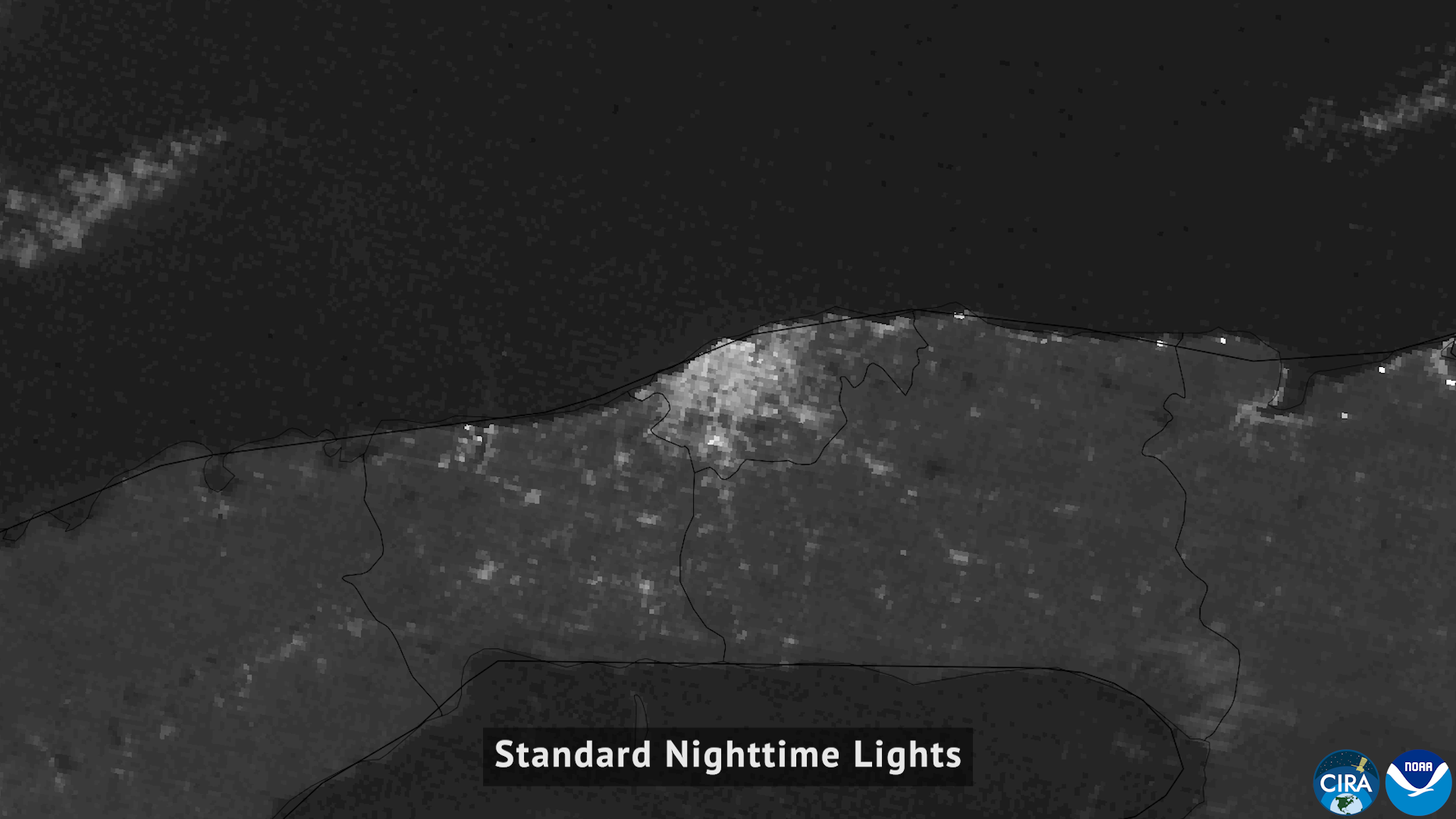
On March 16, 2026, Cuba's Ministry of Energy and Mines reported a complete shutdown of the country's National Electrical System (SEN — Sistema Electroenergético Nacional). This is the eighth major blackout in 25 months and the second total collapse in March 2026 alone.
What Happened
The Ministry posted an official statement: "A complete disconnection of the national electrical system has occurred; the causes are being investigated, and restoration protocols are being activated." A technically significant detail: the Ministry noted that no faults were detected in the generating units that were operating at the time of collapse — the grid failed while nominally functional equipment was still running.
This is a critical signal for engineers: the event was not triggered by a single equipment failure. It was a systemic cascading collapse — a situation where the combined output of all operating units was insufficient to maintain generation-load balance, causing grid frequency to drop below the threshold at which the system can continue operating.
Cuba's Power System: Technical Overview
Cuba operates an isolated island grid with no electrical interconnections to any foreign system. This is a decisive structural factor: when the system runs short of capacity, there is no possibility of emergency import from a neighboring grid — unlike, say, European countries or mainland Latin American states.
Installed vs. Available Capacity
According to data from Unión Eléctrica (UNE, Cuba's national grid operator), the system's historical installed capacity is approximately 6,650 MW. As of early 2026, the grid is generating around 26% of that figure — roughly 1,730 MW.
With peak demand at approximately 3,000–3,080 MW, the generation deficit at peak hours reaches 1,300–1,350 MW — over 40% of total demand.
{
  "title": { "text": "Cuba SEN: Generation vs. Peak Demand (2026)", "left": "center", "textStyle": { "fontSize": 14 } },
  "tooltip": { "trigger": "axis" },
  "xAxis": { "type": "category", "data": ["Available Generation", "Peak Demand"] },
  "yAxis": { "type": "value", "name": "MW", "nameLocation": "end" },
  "series": [
    {
      "type": "bar",
      "data": [
        { "value": 1730, "itemStyle": { "color": "#e04040" } },
        { "value": 3080, "itemStyle": { "color": "#4472c4" } }
      ],
      "label": { "show": true, "position": "top", "formatter": "{c} MW" }
    }
  ]
}
Generation Capacity Breakdown
| Source | Nominal Installed (MW) | Actually Available |
|---|---|---|
| Thermoelectric plants (heavy fuel oil / gas) | ~4,700 | ~875 MW (≈25%) |
| Solar photovoltaics | ~1,068 | up to 900 MW (daylight only) |
| Distributed generation (diesel, biogas) | ~800 | ~422 MW |
| Other renewables (wind, hydro) | ~80 | ~50 MW |
{
  "title": { "text": "Cuba SEN: Nominal Installed Capacity by Source", "left": "center", "textStyle": { "fontSize": 14 } },
  "tooltip": { "trigger": "item", "formatter": "{b}: {c} MW ({d}%)" },
  "legend": { "bottom": 0 },
  "series": [{
    "type": "pie",
    "radius": ["35%", "65%"],
    "data": [
      { "name": "Thermoelectric (HFO/gas)", "value": 4700 },
      { "name": "Solar PV", "value": 1068 },
      { "name": "Distributed Generation", "value": 800 },
      { "name": "Other Renewables", "value": 82 }
    ],
    "label": { "formatter": "{b}\n{c} MW" }
  }]
}
Key System Characteristics
- Grid topology: Radial, single national network; no interconnections with foreign systems
- Transmission voltage: 220 kV (primary backbone), 110 kV
- Largest plant: Antonio Guiteras Thermoelectric Plant (Matanzas) — rated 264 MW; was operating at ~226 MW in 2025 due to ongoing faults
- Equipment age: Most thermoelectric plants were commissioned in the 1970s–1980s — over 40 years without capital maintenance
- Solar expansion: 49 solar parks of 21.8 MW each commissioned throughout 2025 (total ~1,068 MW)
Blackout History (2024–2026)
{
  "title": { "text": "Cuba Major Blackouts: Geographic Scope (2024–2026)", "left": "center", "textStyle": { "fontSize": 14 } },
  "tooltip": { "trigger": "axis" },
  "xAxis": {
    "type": "category",
    "data": ["Feb 2024", "Mar 2024", "Oct 2024\n(5–6)", "Oct 2024\n(18–24)", "Nov 2024\n(Rafael)", "Dec 2024\n(4–5)", "Sep 2025\n(11)", "Dec 2025\n(3)", "Mar 2026\n(4)", "Mar 2026\n(16)"],
    "axisLabel": { "fontSize": 10 }
  },
  "yAxis": { "type": "value", "name": "Population Affected (%)", "max": 100 },
  "series": [{
    "type": "bar",
    "data": [45, 60, 33, 100, 100, 100, 60, 40, 65, 100],
    "itemStyle": {
      "color": {
        "type": "linear", "x": 0, "y": 0, "x2": 0, "y2": 1,
        "colorStops": [{ "offset": 0, "color": "#e04040" }, { "offset": 1, "color": "#ff8c00" }]
      }
    },
    "label": { "show": true, "position": "top", "formatter": "{c}%" }
  }]
}
Timeline
| Date | Scale | Technical Cause | Duration |
|---|---|---|---|
| Feb 8–13, 2024 | ~45% of country | Spare parts shortage; chronic capacity deficit | ~5 days (partial) |
| Mar 17–19, 2024 | ~60% of country | Repeated failures at Antonio Guiteras plant; fuel shortages; up to 18 hrs/day | 3 days |
| Oct 5–6, 2024 | ~33% of country | Generation deficit of 1,045 MW; partial collapse | ~24 hours |
| Oct 18–24, 2024 | 100% (total) | Antonio Guiteras plant failure (1,640 MW removed at cascade peak); grid collapsed 4 times over the weekend | ~6 days |
| Nov 6, 2024 | 100% (total) | Hurricane Rafael landfall; transmission network damage → cascade trip | ~24 hours |
| Dec 4–5, 2024 | 100% (total) | Second failure of Antonio Guiteras; transmission line overload | ~12 hours |
| Sep 10–11, 2025 | ~60% of country | Mechanical breakdown at one of the largest plants | ~24 hours |
| Dec 3, 2025 | ~40% (Havana area) | Transmission line fault between two power plants → overload → ~3.5 million disconnected | ~12 hours |
| Mar 4, 2026 | ~65% (western Cuba) | Capacity deficit; Havana, Pinar del Río, Camagüey | 72+ hours |
| Mar 16, 2026 | 100% (total) | Cascading collapse with nominally functioning units | ongoing |
Technical Analysis: Why the System Keeps Failing
1. Chronic Capacity Deficit at Peak Hours
The system has been running at a structural deficit of ≥40% during peak demand hours for an extended period. Operating perpetually at this margin means any deviation — a single unit trip, unexpected load increase — triggers cascading disconnections. In November 2025, Unión Eléctrica forecasted available capacity of 1,375 MW against peak demand of 3,080 MW: a deficit of 1,775 MW, with the system covering only 44% of actual demand.
2. Critical Generation Concentration on a Single Node
The Antonio Guiteras thermoelectric plant in Matanzas is the largest single generating unit in the country, rated at 264 MW. Its failure in October 2024 removed 1,640 MW from the system at cascade peak — an amount equivalent to more than half of total consumer demand at that moment. This is a direct failure to meet the N−1 security criterion in an isolated system: the failure of any single element must be absorbable without loss of stability. With a chronic capacity deficit, this is structurally impossible.
3. Physical Degradation of Thermal Infrastructure
Most Cuban thermoelectric plants were commissioned in the 1970s–1980s. According to analysis by Columbia University's Horizonte Cubano (2023), "the basic thermoelectric generation infrastructure, as well as its distribution capacity, have collapsed after more than forty years of operation without capital maintenance." As of October 2025, thermal plants were functioning at approximately 25% of their rated capacity — three-quarters of Cuba's thermal installed capacity is technically unavailable.
4. The Solar Paradox: Capacity Without Dispatchability
In 2025 Cuba commissioned over 1,000 MW of solar PV capacity (49 parks × 21.8 MW). In February 2026 the island set a new solar generation record, surpassing 900 MW.
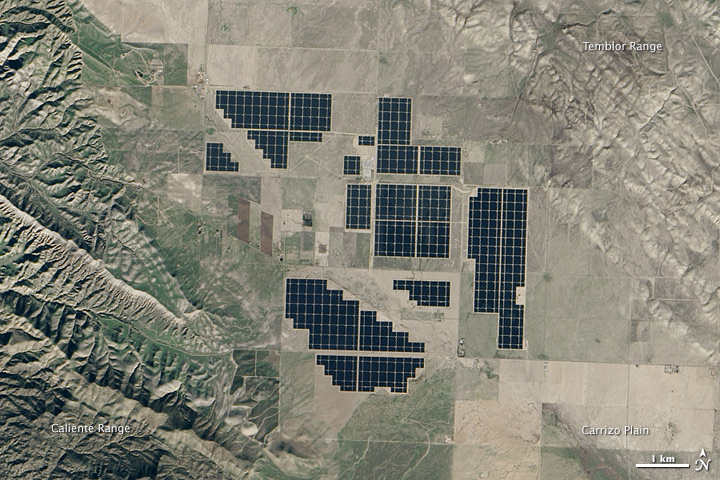
However, solar generation is unavailable at night — and Cuba's peak demand hours are 18:00–22:00 local time. Without battery energy storage systems (BESS) in meaningful volume, solar capacity does not address the evening peak. Cuba began testing battery storage at four substations only in August 2025, with initial capacity remaining limited.
The structural result: solar has improved daytime balance but left the evening peak entirely dependent on aging thermal plants — precisely the equipment that is failing.
5. Island Isolation: No Emergency Import
Cuba's island grid has no electrical tie-lines to any external system. In a generation shortfall, the operator has two options: controlled load shedding (rolling blackouts) or uncontrolled cascade collapse. When load shedding is insufficient or implemented too slowly, the system frequency drops, protection systems activate, and the grid collapses entirely. The March 16, 2026 event — where operating equipment was nominally fault-free — is a direct consequence of this dynamic.
6. The Cascading Collapse Mechanism
The Ministry's statement that "operating units had no faults" allows reconstruction of the technical sequence:
- Baseline deficit ~1,300 MW → load shedding cannot fully compensate
- Frequency drop — grid frequency falls below ~49.0 Hz
- Under-frequency relay cascade — generating units trip sequentially on under-frequency protection (UFLS)
- Total collapse — remaining load exceeds available generation from the last units → blackout
The units "had no faults" — they disconnected correctly on protective relay operation. The grid collapsed due to structural imbalance, not equipment failure.
Lessons for Isolated Power System Engineers
Cuba represents an extreme, but technically instructive, case study for isolated island grids:
-
N−1 security is physically unachievable without spinning reserve. A system chronically operating at ≥40% deficit cannot satisfy N−1 under any protection philosophy. Reserve margin is not an optimization parameter — it is a stability precondition.
-
Concentration of capacity on single large units = concentrated risk. For isolated systems, generation diversity and geographic distribution of units is a core reliability design principle. The country's repeated collapse triggered by a single 264 MW plant illustrates this at scale.
-
Non-dispatchable renewables without storage shift the risk profile, they don't eliminate it. Adding 1,000 MW of solar without dispatchable backup or storage does not reduce peak-hour risk — it may increase it, by increasing the gap between daytime and nighttime available capacity.
-
Black-start capability is undersized for the grid's collapse frequency. Restoring a totally blacked-out isolated system requires dedicated black-start units (typically hydro or gas turbines). Cuba has very limited such capacity, which is why the October 2024 restoration took approximately six days.
-
Deferring capital maintenance accumulates operational risk. Cuba illustrates this at scale: four decades without capital-level overhaul have left the thermal fleet as a superposition of latent technical failures, where any operational disturbance can initiate cascading failure.
Sources: Wikipedia — 2024–2026 Cuba blackouts; Unión Eléctrica de Cuba (UNE); Ministerio de Energía y Minas (X); Horizonte Cubano / Columbia University; IEEE Spectrum; CiberCuba; Granma; Bloomberg Línea; Al Jazeera; PV Magazine; Power Magazine
Published: March 16, 2026